
How Long Does It Take to Train a Dog?

Training a dog takes time, patience, and consistency. While many factors affect the timeline, it typically takes 4 to 6 months to teach basic obedience commands, though behavioral challenges can require additional months. Every dog learns differently based on its age, breed, and the commitment of the trainer.
This guide explores the common training timelines, tips to speed up learning, and insights from expert Nicholas H. Dodman, a renowned animal behaviorist. Let’s dive in!
Quick Links
What Factors Influence Dog Training Duration?
Several factors come into play when determining how long it will take to train a dog. Age, breed, environment, and even the type of training all play a significant role in the process.
1. Age and Breed of the Dog

Young Puppies vs. Older Dogs: A Comparison
Training a puppy typically begins around 8 weeks old. At this stage, short and consistent sessions work best since young puppies have shorter attention spans. In contrast, older dogs can take longer to adapt to new behaviors but are equally capable of learning with the right reinforcement.
Breed Influence: Are Some Breeds Easier to Train?
Certain breeds, like Border Collies and German Shepherds, are known for their quick learning ability. On the other hand, breeds like Basset Hounds and Beagles may require more patience due to their independent nature.

Training Type: Obedience vs. Behavioral
1. Obedience Training Basics (4-6 Weeks)
Obedience training focuses on basic commands like sit, stay, recall, and leash walking. With consistent practice, dogs usually grasp these commands within 4 to 6 weeks. However, reinforcement must continue beyond this period to ensure the dog retains the behaviors in various environments.
2. Behavioral Training for Specific Issues (3-6 Months)
Behavioral training, such as addressing separation anxiety or aggression, can take several months. According to Nicholas H. Dodman, emotional states play a significant role in how dogs learn. Behavioral training isn’t about commands alone but about reshaping the dog’s emotional responses to stimuli.
Typical Dog Training Timelines: A Breakdown
Many owners wonder how long it will take to fully train their dog. Here’s a general timeline to help set expectations.
Service dogs undergo intensive training that includes public behavior training and skill-specific tasks. The International Association of Assistance Dog Partners (IAADP) recommends 120 hours of training with 30 hours in public settings.
Tips to Speed Up Your Dog’s Learning Process
1. Involve All Household Members in Training
Dogs need consistent messaging from all household members. If one person allows jumping while others discourage it, the dog becomes confused, slowing down progress.
2. Use Positive Reinforcement Techniques
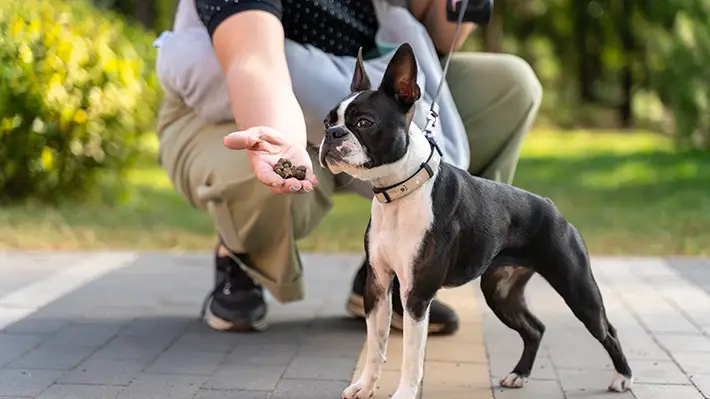
Avoid punishment-based methods, which can increase fear and anxiety. Instead, reward good behavior with treats, praise, or play to encourage your dog to repeat the desired actions.

Image source: Telegram.com
Expert Insights: What Does Nicholas H. Dodman Say About Dog Training?
Nicholas H. Dodman, BVMS, DACVA, DACVB, emphasizes that training is a lifelong process. Dogs are constantly interpreting emotional signals from their environment. He advises focusing on shaping behavior through positive experiences rather than forcing compliance.
“Just like humans, dogs thrive when they feel safe and understood,” says Dodman. “The more emotionally supportive the environment, the faster the learning process.”
FAQs: Common Questions
About Dog Training
Conclusion: Training Is a Lifelong Journey
Training isn’t a one-and-done process—it’s a lifelong journey. Even after mastering basic commands, dogs will need refresher sessions and ongoing reinforcement. With patience, positive reinforcement, and consistent effort, you’ll build a strong bond with your dog that lasts a lifetime.


